Why Is My Floor Sagging? Common Causes in Older Rowhouses
If you own a rowhouse in Philadelphia, a sagging floor isn't just an aesthetic annoyance. It's a red flag that something structural is failing beneath your feet. The causes vary, but understanding them is the first step toward fixing the problem before it gets worse.
The most common culprit in century-old rowhouses is Wood Rot & Dry Rot Repair in the floor joists themselves. Rowhouses built in the late 1800s and early 1900s often used dimensional lumber that's now decades past its original lifespan. When moisture infiltrates from basement dampness, roof leaks, or plumbing failures, the wood begins to decay. Rotted joists lose their structural integrity and can no longer support the load of the floor above, causing that telltale sag or bounce.
Termite Damage Repair is another serious concern, especially in older homes. Subterranean termites tunnel through wood silently, hollowing it out from the inside. A floor joist that looks solid on the surface may be structurally compromised. Additionally, undersized or damaged support beams, settlement of the foundation, or simply the natural aging of wood can all contribute to sagging. In some cases, previous renovations removed load-bearing walls without proper support, shifting weight to floor systems that weren't designed to handle it.
How Floor Joist Repair and Sistering Joists Works
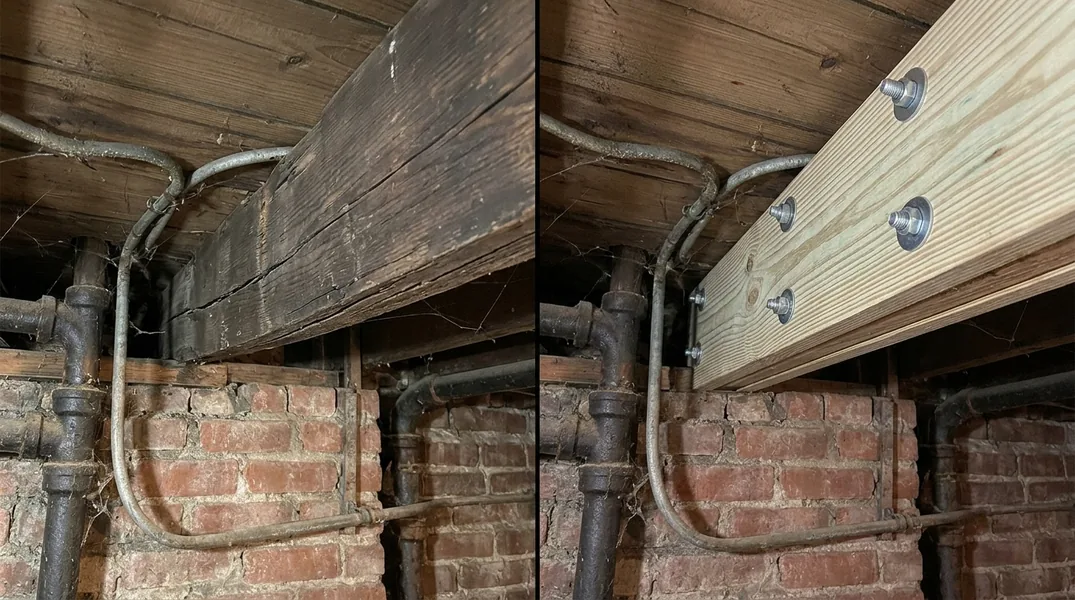
Floor Joist & Subfloor Repair is one of the most effective solutions for sagging floors caused by weakened or damaged joists. The process begins with a thorough inspection to identify which joists are compromised and how severely. A qualified carpenter will assess whether the damage is localized to one or two joists or if it's widespread throughout the floor system.
Sistering floor joists is a proven repair method that reinforces damaged joists without complete replacement. In this technique, a new joist (or sometimes a steel reinforcement beam) is fastened alongside the damaged joist, essentially creating a stronger, doubled-up support system. The sister joist is bolted and nailed securely to the original joist, distributing the load across both members. This approach is less invasive than full joist replacement and often costs less, making it popular for homeowners looking for effective but budget-conscious repairs.
For more severe damage, full joist replacement may be necessary. This involves carefully removing the damaged joist and installing a new one, a more labor-intensive process that requires temporary support beams to hold the floor up during work. The choice between sistering and replacement depends on the extent of the damage, the load the joist carries, and your budget. A professional carpenter near you can evaluate your specific situation and recommend the best approach.
Floor Joist Repair Cost in Philadelphia: What to Budget
Understanding the pricing for floor joist repairs helps you plan financially and avoid sticker shock. In Philadelphia, the cost of repairing sagging floors varies widely depending on the scope of damage and the repair method chosen.
Sistering joists typically costs between $800 and $2,500 per joist, depending on the joist length, accessibility, and whether additional structural work is needed. If you have two or three compromised joists, you're looking at $1,600 to $7,500 for the repair. Full joist replacement is more expensive, ranging from $1,500 to $4,000 per joist, because it requires more labor and temporary support structures. If the damage extends to the subfloor or if rot is widespread, costs climb further as more material and labor hours are needed.
Additional factors that influence cost include the accessibility of the crawl space or basement (easier access means faster work), the presence of utilities running through or near the joists, and whether asbestos abatement is necessary in older homes. If the sagging is caused by a failed support beam rather than joist decay, Beam Replacement & Load-Bearing Wall Removal costs can range from $3,000 to $10,000 or more. The best way to get an accurate estimate for your home is to request a free estimate from a qualified local contractor who can inspect your specific situation.
Signs Your Sagging Floor Needs Professional Attention
Not every slightly uneven floor requires immediate repair, but certain warning signs indicate you should call a professional without delay. If you notice a pronounced sag in the middle of a room, a floor that feels spongy or bouncy when you walk on it, or visible cracks in the joists themselves, these are red flags. Doors and windows that no longer close properly, or that stick and bind, often signal foundation or structural movement that affects the entire floor system.
Musty odors in the basement or crawl space, visible mold growth on joists, or soft, discolored wood are clear indicators of rot. If you can press your finger into a joist and the wood feels soft or crumbles, structural failure is already underway. Water stains, evidence of past or present leaks, and visible pest damage are equally serious. The longer you wait to address these issues, the more damage spreads and the more expensive the repair becomes. What might cost $2,000 to fix today could easily balloon to $8,000 or more if rot or termite damage is left unchecked for another year.
If you're unsure whether your floor problem requires repair, contact Philadelphia Carpentry at (267) 477-7458 to schedule an inspection. A professional can distinguish between cosmetic settling and genuine structural failure, giving you peace of mind and a clear path forward.
The Repair Process: What to Expect
Once you've decided to repair your sagging floor, understanding the timeline and process helps you prepare your household. Most floor joist repairs take between three to seven days, depending on complexity. The work typically begins with temporary support installation. Adjustable posts or hydraulic jacks are positioned to support the floor above while the damaged joists are worked on. This is crucial for safety and prevents further sagging during the repair.
Next, the carpenter removes any flooring, subflooring, or obstacles blocking access to the damaged joists. If rot is present, all decayed wood must be removed and replaced. The sister joist is then positioned alongside the original joist and secured with bolts, lag screws, and nails spaced according to building codes. Once the repair is complete and the wood has been treated (if rot was present), temporary supports are gradually removed and the floor is monitored to ensure it holds its new position. Finally, subflooring and finished flooring are reinstalled.
During the repair, you may experience dust, noise, and limited access to certain areas of your home. It's wise to arrange for pets and young children to stay elsewhere during the heaviest work days. Most reputable contractors will provide a detailed timeline and explain what to expect at each stage. Philadelphia Carpentry takes pride in minimizing disruption while delivering quality repairs that last decades.
Preventing Future Floor Sagging: Maintenance and Moisture Control
After investing in floor joist repair, protecting your investment means addressing the underlying causes of decay and damage. Moisture control is paramount. Ensure your basement or crawl space stays dry by maintaining gutters and downspouts, grading soil away from the foundation, and installing a sump pump if needed. Vapor barriers in crawl spaces reduce humidity, and proper ventilation prevents moisture buildup. Regular plumbing inspections catch leaks before they cause rot, and roof maintenance prevents water from infiltrating the attic and trickling down to floor systems.
Schedule annual inspections of your foundation, basement, and crawl space to catch early signs of moisture, rot, or pest activity. If you notice any soft spots, discoloration, or musty smells, address them immediately rather than waiting for structural failure. Keep gutters clear of debris, ensure downspouts extend at least six feet from the foundation, and maintain proper grading around your home. These simple steps can add decades to the life of your floor joists and prevent costly repairs down the road.
If you're concerned about your home's structural integrity or have noticed signs of sagging, don't wait. Contact Philadelphia Carpentry today at (267) 477-7458 or request a free estimate to have a professional evaluate your floor and recommend the best repair strategy for your rowhouse.
Looking for a professional carpentry contractor in Philadelphia? Philadelphia Carpentry responds fast for all your carpentry needs.
Get a Free QuoteOur services: Wood Rot & Dry Rot Repair · Termite Damage Repair · Floor Joist & Subfloor Repair