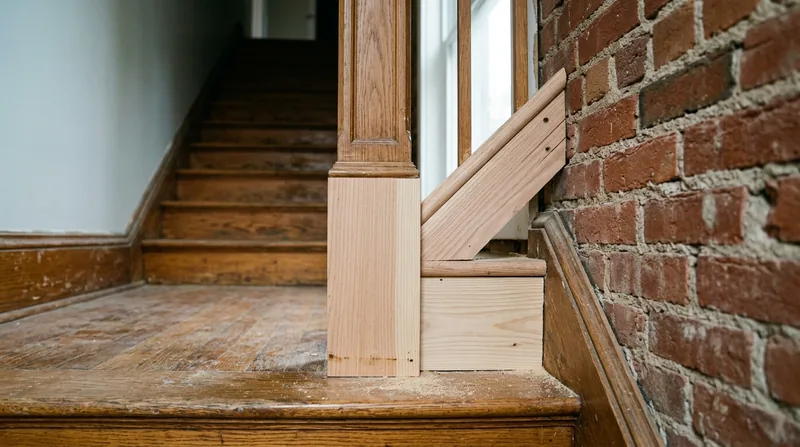




Philadelphia's narrow rowhouse staircases, from the steep, tight flights in South Philly trinity houses to the wider, more graceful stairs in Germantown Victorians and Main Line colonials, take a beating over a century or more. Squeaky treads, loose balusters, worn stringers, and wobbly newel posts are common, especially on interior stairs where humidity and foot traffic compound the wear. Stair and railing repair in Philadelphia restores both safety and the period character of homes built when craftsmanship meant solid wood construction. We repair tread and stringer damage, tighten loose railings, restore period balustrades, and install code-compliant handrails where needed. Whether you have a creaking Victorian staircase in Chestnut Hill or a deteriorating rowhouse flight in Kensington, we work from the wood itself, fixing what can be fixed and replacing what cannot. Our approach respects the original detail and materials while meeting current building code.
Why Stair and Railing Repair Matters in Philadelphia's Historic Homes
Philadelphia's residential stock is among the oldest in the country. Thousands of rowhouses, twins, and detached homes built between 1900 and 1950 still have their original staircases, often made from Douglas fir, chestnut, or oak. These stairs have moved through seasonal humidity cycles, bearing weight and creaking, for over a century. A squeaky tread is a sign of movement in the substructure. Loose balusters signal fastening failure. Worn stringers can eventually affect the structural integrity of the entire staircase. Addressing these issues early keeps stairs safe and preserves the original joinery and finish.
- We tighten loose treads and risers using traditional joinery and modern fastening where the wood is sound.
- We replace individual balusters and newel posts that are cracked, split, or rotted, matching period profiles and wood species.
- We repair or replace stringers damaged by water, settling, or age while maintaining the original staircase geometry.
- We install modern handrails that meet current code without removing or altering original period railings.
- We restore painted or stained finishes to match the existing character of the staircase.
A well-maintained staircase is safer, quieter, and preserves the value and character of your home.
Key info: Many Philadelphia rowhouses built before 1950 have narrow, steep staircases with original wood stringers that have settled or developed gaps at the walls. These gaps let air and moisture in around the staircase opening, which can lead to wood rot in the rim joist and subfloor nearby. We often find and repair this damage while addressing the stairs themselves. If you notice a gap between your staircase and the wall, or soft wood at the landing, contact us for an inspection.
How We Repair Stairs and Railings: Our Process in Philadelphia
We start with a walk-through inspection. We test treads for movement, check balusters for tightness, look for cracks or splits in stringers, and assess the condition of the fasteners and glue joints. We measure the staircase and document the original profile and finish. Then we explain what we find and propose repair or replacement for each component. Most jobs are completed in one to three days, depending on the extent of the work and whether finishes need time to cure.
- We inspect the entire staircase, testing for movement, checking fasteners, and documenting the original construction and finish.
- We identify which components can be tightened or reinforced and which need replacement.
- We repair treads and stringers using sistering, reinforcement, or replacement as the wood condition warrants.
- We tighten or replace balusters, newel posts, and handrails, matching profiles and fastening methods to the original.
- We refinish the repaired or replaced components to blend with the existing staircase.
- We test the finished staircase for safety and stability before final walkthrough with you.
This methodical approach ensures that every repair is sound, looks right, and lasts.
Local example: A homeowner in Fishtown noticed her staircase was squeaking and one baluster was loose. We found that the tread fasteners had loosened over decades of foot traffic, and the baluster was split at the mortise where it joined the handrail. We re-fastened the tread from underneath using traditional lag bolts, replaced the baluster with a matching profile in oak, and refinished the section to match. The work took two days and cost under $1,200. The stairs are now silent and solid.
Stair and Railing Repair Methods: Repair vs. Replace
| Approach | Description | Best for |
|---|---|---|
| Tightening and Re-fastening | We tighten loose fasteners, re-glue joints, and reinforce connections using traditional and modern methods. | Squeaky treads, loose balusters, movement at handrails, minor settling. |
| Sistering and Reinforcement | We attach a sister board alongside a weakened stringer or tread to restore strength without removing the original. | Stringers with minor cracks, sagging treads, wood that is solid but weakened by age or settlement. |
| Component Replacement | We remove and replace individual treads, balusters, newel posts, or stringers, matching profiles, species, and finish. | Wood with rot, deep splits, severe wear, or when repair would be temporary or unsafe. |
| Modern Handrail Installation | We install code-compliant handrails and grab bars that meet current safety standards without altering original railings. | Homes where code requires handrails but original period railings must be preserved or supplemented. |
Stair and Railing Repair Cost in Philadelphia: What to Expect
Stair and railing repair in Philadelphia typically starts at around $600 for minor tightening and tread repair, and ranges up to $3,000 or more for extensive stringer replacement or balustrade restoration on a full flight. The cost depends on the scope of the work, the condition of the wood, the complexity of the joinery, and whether finishes need to be matched and cured. A single loose baluster might run $200 to $400. Replacing a full flight of treads and stringers, or restoring a period handrail with multiple balusters, can easily exceed $2,500. We recommend getting two or three estimates so you understand the scope and pricing before committing. Our estimate is free and typically provided within 24 hours. For detailed pricing on your specific staircase, visit our pricing page or call us at (267) 477-7458.
Several factors affect the final cost. The size of the staircase matters, as does the number of treads, balusters, and other components needing attention. The condition of the wood determines whether repair is possible or replacement is necessary. Access to the underside of the staircase, the complexity of the original joinery, and whether you want to match finishes all influence the labor time. Historic homes in Chestnut Hill or Society Hill may have more intricate railings that require careful restoration, while simpler rowhouse flights in Northeast Philadelphia or Upper Darby may be more straightforward. We inspect each staircase individually and provide a clear estimate before any work begins.
Stair and Railing Repair Near Me: What Philadelphia Homeowners Should Know When Hiring a Carpenter
Choosing the right carpenter for staircase work is important. You want someone who understands period construction, can match original joinery and finishes, and knows when to repair versus replace. Ask potential contractors about their experience with historic homes and narrow rowhouse staircases. Request references from recent staircase projects. Check that they are fully insured and can provide a certificate of insurance. Understand what the estimate covers, including materials, labor, and any finishing work. Ask about permits. In Philadelphia, alterations to stairs or railings may require a building permit, especially if the work affects code compliance or structural elements. Verify with the Philadelphia Department of Licenses and Inspections before starting work. If you are in a historic district or have an HOA, check whether approval is needed before work begins.
- Confirm that the contractor is fully insured and can provide proof of coverage on request.
- Ask for references from at least two recent staircase or railing repair projects in Philadelphia or nearby towns.
- Request a detailed written estimate that breaks down materials, labor, and finish work.
- Check with the Philadelphia Department of Licenses and Inspections to determine whether a permit is required for your specific repair.
- If your home is in a historic district, verify with the Philadelphia Historical Commission whether design review is needed before work begins.
- Discuss the timeline and whether the contractor can complete the work in your preferred window, accounting for finish curing time.
Taking time to vet your contractor and understand the scope and cost upfront protects your home and your investment. When you are ready to move forward, contact us for a free estimate. We are happy to walk you through the process and answer any questions about your staircase.
For related structural and finish carpentry services, we also repair wood rot and dry rot that often appears around staircase openings, and we handle finish carpentry and trim work throughout your home. Whether your project is a single squeaky stair or a full staircase restoration, we bring the same attention to detail and respect for Philadelphia's historic building stock.
Stair & Railing Repair in Philadelphia: Pricing Guide
| Service | Price | Details |
|---|---|---|
| Tightening and minor tread repair | Starting at $600 | Includes inspection, tightening loose fasteners, re-gluing joints, and finishing touched areas to blend |
| Single baluster or newel post replacement | Starting at $400 | Includes removal, new component matched to original profile and species, and finishing to match existing staircase |
| Stringer repair or sistering | Starting at $1,200 | Includes inspection and reinforcement of damaged stringers, fastening, and finishing; cost increases with extent of rot or damage |
| Full staircase restoration or replacement | On estimate | Requires on-site inspection to assess wood condition, joinery complexity, and finish matching; typically $2,500 to $5,000 depending on scope |
| Travel | Included | No separate call-out or mileage fee for Philadelphia and surrounding areas within our service zone |
| Free estimate | No obligation | Response within 24 hours at (267) 477-7458; we provide a detailed written quote before any work begins |
Indicative pricing, the exact cost depends on square footage, finish, and site access. Free personalized estimate within 24h at (267) 477-7458.


