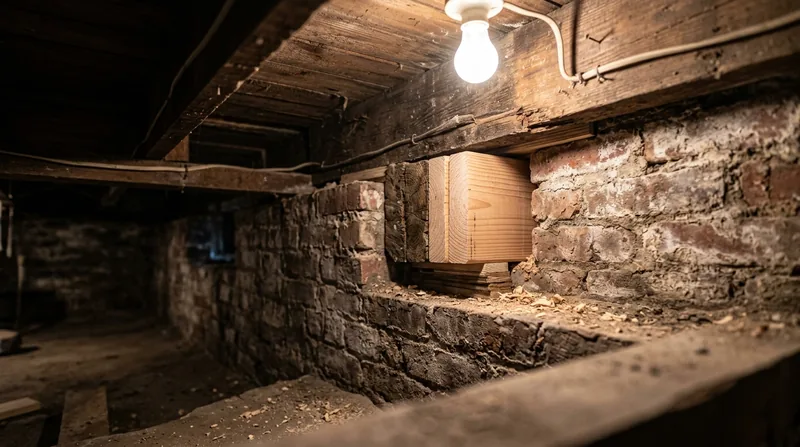




Sagging, bouncy, or soft floors in Philadelphia's century-old rowhouses almost always point to damaged floor joists or subfloor rot. These structural wood members sit beneath your hardwood floors and carry the full weight of furniture, people, and the house itself. In the dense brick rowhouses of South Philly, Fishtown, and Kensington, or the wider Victorian twins of Germantown and Mount Airy, water infiltration from aging roof systems, foundation moisture, or plumbing leaks gradually compromises the joist timber and the subfloor sheathing that sits on top of it. Floor joist and subfloor repair in Philadelphia restores the structural integrity of your floor system by sistering compromised joists, replacing rotted sections, and rebuilding subfloor to bring the floor level and solid again. We work from a straightforward diagnosis: we identify which members are damaged, explain what caused the failure, and propose repair or replacement accordingly. Our goal is a floor that feels firm underfoot and will carry load safely for decades to come.
Why Floor Joist and Subfloor Failure Matters in Philadelphia Rowhouses
Philadelphia's residential stock is old, and old wood buildings accumulate moisture. The flat-to-gently-rolling terrain between the Delaware and Schuylkill Rivers keeps groundwater pressure constant, and the changeable Mid-Atlantic climate brings hot humid summers, cold snowy winters, and occasional nor'easters that drive water into masonry and timber. Joists sit in the dark, damp zone just above the foundation or rim board where air circulation is poor and moisture lingers. Once rot takes hold, a joist loses load-bearing capacity incrementally. A homeowner might notice a soft spot near a radiator or a slight bounce near a window, then ignore it for months or years. By the time the floor feels noticeably sagging, significant wood loss has usually occurred, and the repair scope has grown.
- A compromised joist transfers its load to neighboring members, overloading them and accelerating their decline.
- Soft subfloor allows floor finishes to move and crack, and creates hollow spots that amplify footstep noise.
- Visible sagging or bounce signals that repair should not be delayed, as the structural reserve margin is already consumed.
- Water damage to joists often spreads sideways along the grain, affecting longer spans than the visible soft spot suggests.
Early intervention stops the cascade. Addressing rot at the joist or rim board before it travels into load-bearing walls or beams keeps repair costs proportional to the actual damage.
Key info: In a typical Fishtown or South Philly rowhouse, a rotted rim joist or sill plate where the band board meets the foundation masonry is one of the most common failure points. Water wicks up the brick, saturates the wood, and rot advances inward. We remove the damaged section, install new pressure-treated or rot-resistant timber, and seal the masonry to stop future moisture ingress.
For more detail on wood rot pathology and repair, see our wood rot and dry rot repair page. The Philadelphia Department of Licenses and Inspections (L&I) oversees building code compliance for structural work, and permits are required for joist replacement or subfloor alteration in most cases.
How We Repair Floor Joists and Subfloor in Philadelphia Homes
Our process starts with a site inspection and a clear diagnosis. We identify which joists or subfloor sections are damaged, measure the extent of rot, and determine whether the wood can be sistered (reinforced alongside a new member) or must be replaced. We explain what caused the failure so you understand the root cause and can address it. Then we propose a repair scope, timeline, and cost. Once you approve, we get the work done in sequence: we remove flooring if necessary, install temporary support if the span is long, remove or reinforce the damaged member, install new subfloor sheathing, level the floor, and prepare for finish flooring to go back down.
- We inspect the joist and subfloor system, probe for soft wood, and assess moisture sources.
- We determine whether to sister a new joist alongside the damaged one or remove and replace the member entirely.
- We install temporary support posts or beams if the span is long enough that removal would cause sagging above.
- We remove rotted joist sections or the entire joist, taking care to preserve adjacent framing and plumbing or electrical runs.
- We install new joist stock (typically pressure-treated lumber or dimensional Douglas fir) and secure it to the rim board and existing beams with bolts and blocking.
- We rebuild subfloor with 3/4-inch plywood or tongue-and-groove subfloor, shim and level the surface, and fasten it securely.
- We address the moisture source (roof leak, foundation seepage, plumbing drip) so the repair does not rot again.
- We remove temporary support and verify floor is level and solid before finish flooring or new subfloor preparation.
The entire process typically takes 3 to 7 days depending on job size and whether we need to coordinate with other trades.
Example: A Germantown homeowner noticed a soft floor in the downstairs bedroom near the back wall. We found two joists with rot extending 4 feet along the grain, caused by a slow roof leak that had saturated the rim board and band board above. We sistered new joists, rebuilt the subfloor, patched the roof, and sealed the rim board. The floor is now level and firm. Total time on-site was 5 days.
For related structural carpentry work, see our framing and structural carpentry page.
Floor Joist and Subfloor Repair Methods
| Approach | Description | Best for |
|---|---|---|
| Sistering | Install a new joist or beam alongside the damaged member, bolted or lag-screwed together to act as one unit. | Partial rot or localized damage where the joist is still sound enough to share load with a reinforcement member. |
| Full Replacement | Remove the entire joist or subfloor section and install new pressure-treated lumber or rot-resistant species. | Extensive rot, multiple joists in a row, or when existing member is too compromised to safely support a sistered beam. |
| Rim Board and Sill Plate Repair | Remove rotted rim joist or sill plate where it meets the foundation, install new pressure-treated member, and seal the masonry to stop moisture entry. | Water wicking up from foundation masonry; common in rowhouses and older frame homes near grade. |
| Subfloor Replacement | Remove soft or rotted subfloor sheathing and install new 3/4-inch plywood or tongue-and-groove subfloor, shimmed level. | Subfloor damage independent of joist rot, or when existing subfloor prevents accurate assessment of joist condition below. |
| Moisture Source Remediation | Identify and correct the water leak or moisture pathway that caused the rot (roof, plumbing, foundation seepage) to prevent recurrence. | All joist repairs; without addressing the source, new wood will rot on the same timeline as the original failure. |
Floor Joist and Subfloor Repair Cost in Philadelphia: What to Expect
A straightforward joist repair in Philadelphia typically starts at $1,800 and scales with scope. A single sistered joist with subfloor patch and moisture remediation in a rowhouse might run $2,200 to $3,500. Full joist replacement across a longer span, or multiple joists in an open area like a basement or second-floor bedroom, can reach $4,500 to $7,000 or more. Factors that move the cost are the number of joists affected, the length of the span, access to the work area, whether temporary support is needed, and whether the moisture source requires contractor involvement (roof repair, foundation sealing) or is the homeowner's responsibility to address separately.
Rim board and sill plate repairs, which are common in Philadelphia rowhouses, typically run $1,200 to $2,800 depending on linear footage and the extent of masonry work needed to prevent future water entry. Subfloor replacement alone, if joists are sound, costs $800 to $1,600 for a typical bedroom or hallway section.
The best way to get an accurate number is to request a free estimate. We visit the site, probe the wood, identify the scope, and give you a clear price and timeline with no obligation. Call us at (267) 477-7458 or visit our pricing page for more detail on what drives costs and how we structure estimates.
What to Look for When Hiring a Floor Joist and Subfloor Repair Contractor Near Philadelphia
Finding a reliable carpenter in the Philadelphia area means checking three things: insurance and credentials, a clear estimate, and references from recent work. Structural repairs like joist replacement often require a permit from the Philadelphia Department of Licenses and Inspections, so ask whether the contractor is familiar with the L&I code and willing to pull permits if needed. Get 2 or 3 estimates so you can compare scope, timeline, and price. A contractor who takes time to explain the damage and the repair method, and who proposes repair before replacement when the wood justifies it, is more trustworthy than one who rushes to a quote or recommends replacing everything.
- Verify the contractor is fully insured with general liability and workers compensation coverage.
- Ask for references from 2 or 3 recent joist or subfloor jobs in Philadelphia or nearby towns.
- Confirm the contractor understands Philadelphia building code and is willing to coordinate with L&I if a permit is required.
- Get a written estimate that lists the scope of work, materials, labor, timeline, and final price with no hidden fees.
- Ask how the contractor will address the moisture source, not just replace the wood.
- Check that the contractor has experience with the specific failure mode in your home type (rowhouse, Victorian, frame house).
We have been in business since 2016 and are fully insured. We work throughout Philadelphia and the surrounding area, including Cherry Hill, Camden, Bensalem, Norristown, Upper Darby, King of Prussia, West Chester, Media, Doylestown, and beyond. If you have a sagging or soft floor and want a straight diagnosis and repair plan, contact us for a free estimate.
Floor Joist & Subfloor Repair in Philadelphia: Pricing Guide
| Service | Price | Details |
|---|---|---|
| Single joist repair or sister | Starting at $1,800 | Includes joist inspection, sistering or partial replacement, subfloor patch, and moisture source assessment |
| Multiple joists or full span replacement | Starting at $3,500 | Full joist removal and replacement, new subfloor sheathing, leveling, and temporary support if needed for long spans |
| Rim board or sill plate repair | Starting at $1,200 | Damaged rim joist removal and replacement, masonry sealing to prevent future water entry, linear footage and access dependent |
| Complex or multi-area job | On estimate | Multiple rooms, structural coordination with beams or walls, or moisture remediation requiring roof or foundation work |
| Travel | Included | No separate call-out or mileage fee within Philadelphia and surrounding service area towns |
| Free estimate | No obligation | Response within 24 hours, site inspection, damage diagnosis, and written cost and timeline proposal |
Indicative pricing, the exact cost depends on square footage, finish, and site access. Free personalized estimate within 24h at (267) 477-7458.


