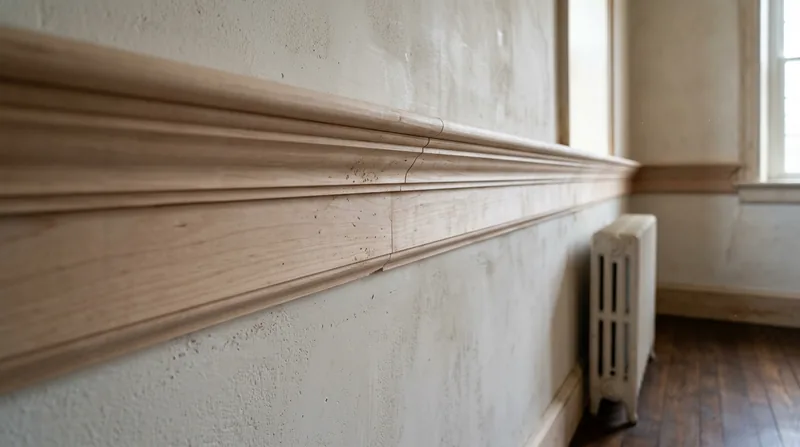




Crown molding and baseboard installation in Philadelphia is a hallmark of finish carpentry that ties a room together, whether you're working with the original Victorian profiles in a 1920s Fishtown rowhouse, the crisp Colonial lines of a Society Hill townhouse, or the clean modernism of a newly renovated Chestnut Hill home. Philadelphia's dense urban residential stock, built across more than a century and spread across tight rowhouse blocks and wider Victorian twins, demands trim work that respects the bones of the building while meeting today's finish standards. Baseboards protect walls from scuffs and water splash. Crown molding softens the joint between wall and ceiling, hides imperfect drywall seams, and carries the character of the house upward. Both are installed with clean caulk lines, tight coped joints, and fasteners set so they disappear. We match existing trim profiles or install new stock to spec, working room by room or whole-house, and the work shows immediately.
Why Crown Molding and Baseboard Installation Matters in Philadelphia Homes
Philadelphia's older homes carry substantial trim throughout. A 1950s South Philly rowhouse or a Germantown Victorian twin typically has 3 to 4-inch baseboards and proportional crown molding in every room, often made of solid wood and original to the house. When that trim is damaged, missing, or has been removed, the room feels incomplete and walls look raw. Baseboards also perform a practical function: they shield drywall and plaster from the daily damage of vacuum cleaners, furniture legs, and wet mops. Crown molding hides the gap where drywall tape and joint compound meet the ceiling, a seam that is almost impossible to finish perfectly. Replacing or upgrading trim is one of the highest-impact, most visible improvements a homeowner can make, and it's one of the few projects where the before-and-after is dramatic enough to justify the cost.
- We install baseboards and crown molding in solid wood, veneer, or finger-jointed stock matched to your home's era and style.
- We cope joints at inside corners so trim fits tightly even where walls are not perfectly square, a common condition in old Philadelphia houses.
- We set fasteners below the surface, fill and sand, and caulk all seams so trim appears seamless and finished.
- We install chair rail, window casings, and door trim to the same standard when the scope includes them.
The result is a room that feels complete and protected, with trim lines that are tight, level, and ready to paint or stain.
Local context: Philadelphia's brick rowhouses have plaster walls that shift slightly with seasonal humidity and age. Crown molding and baseboard must be installed with shims and fasteners that allow the trim to move without cracking caulk or popping nails. This is why coped joints and flexible caulk are not optional in Philadelphia, they are the only method that lasts.
For more information on finish carpentry standards and techniques, see our finish and trim carpentry page, which covers casings, wainscoting, and custom trim details.
How We Install Crown Molding and Baseboards in Philadelphia
The work begins with a site visit to measure the room, assess wall and ceiling condition, and identify any obstacles like electrical outlets, radiators, or built-in shelving. We then source trim stock that matches your existing profiles or meets your design intent. Installation follows a logical sequence: we locate studs and ceiling joists, snap chalk lines to keep trim level and plumb, fasten trim to solid backing, and finish with caulk and paint or stain.
- We measure the room and verify ceiling height and wall plumb before ordering stock to ensure trim arrives ready to install.
- We locate and fasten to studs and joists using finish nails or screws set below the surface for a clean appearance.
- We cope inside corners so the profile of one piece wraps around the profile of the adjacent piece, eliminating gaps even if walls shift.
- We caulk all seams with paintable caulk and sand smooth after it dries, so caulk lines are invisible.
- We leave trim unfinished or prime and paint according to your preference, or we can coordinate with your painter.
This sequence ensures trim is level, secure, and finished to a standard that lasts decades in Philadelphia's changeable climate.
Example: A 1920s rowhouse in Kensington with original 4-inch baseboards and 5-inch crown molding in the living room and bedrooms, but missing baseboard in the kitchen and hallway. We source matching profile stock, install baseboard in the kitchen and hallway, and touch up existing trim throughout. The cost is lower than replacing everything, and the house feels complete.
See our contact page to request a free estimate and discuss your specific trim scope.
Installation Methods and When to Use Each
| Approach | Description | Best For |
|---|---|---|
| Solid wood trim | Finger-jointed or clear pine, poplar, or hardwood fastened to studs and joists with finish nails and caulked. | Homes where original trim was wood, or where durability and appearance justify the cost. |
| Veneer or MDF trim | Medium-density fiberboard with wood veneer or paint-grade finish, lighter to handle and stable in humid climates. | Modern homes or budget-conscious projects where stain is not required and paint finish is acceptable. |
| Coped joint installation | Inside corners are cut with a coping saw so the profile of one piece wraps the profile of the adjacent piece. | All Philadelphia homes, especially older rowhouses where walls shift and miter joints will open or crack. |
| Miter joint installation | Two pieces cut at 45 degrees and joined at inside corners, creating a crisp line if walls are perfectly square. | New construction or homes with perfectly plumb walls, rare in Philadelphia's older stock. |
Coped joints are the standard in Philadelphia because the city's brick rowhouses and older frame homes have walls that are rarely perfectly plumb or square. A miter joint that looks perfect when installed will open and crack as the house settles or humidity changes. We use coped joints as the default method and explain the trade-off when a simpler approach is appropriate.
Crown Molding and Baseboard Installation Cost in Philadelphia: What to Expect
Crown molding and baseboard installation in Philadelphia starts at $450 for a single room, and the cost scales with the linear footage of trim, the complexity of the room layout, and the finish you choose. A typical 12-by-14-foot bedroom with one window and one door requires roughly 52 linear feet of baseboard and 48 linear feet of crown molding, placing the material cost between $200 and $400 depending on profile and species, and labor cost between $400 and $600. A whole-house project covering 2,000 linear feet of trim can run $3,500 to $5,500 in labor alone. Factors that affect price include the number of inside corners (which require coping), the number of outlets and vents to cut around, whether existing trim must be removed, and whether the trim is to be painted or stained.
We recommend getting 2 to 3 estimates from different contractors so you can compare approach, materials, and timeline. Some contractors will quote per linear foot, others per room, and others by total scope. Ask what is included at the quoted price: does it cover caulking and filling fasteners, or is that additional? Does it include paint or stain, or is the trim left unfinished? Does the estimate account for coped joints and a finished appearance, or are miters assumed? These details move the price significantly.
For a detailed pricing breakdown covering different room sizes and trim profiles, see our pricing page. To discuss your specific scope and get a free estimate, call (267) 477-7458 or visit our contact page.
Crown Molding and Baseboard Installation Near Me: What Philadelphia Homeowners Should Know When Hiring
When you're looking for a carpentry contractor to install crown molding and baseboard in Philadelphia or nearby, a few criteria separate a solid job from one that will need rework. First, confirm that the contractor is fully insured and can provide a certificate of insurance. Second, ask to see photos of previous work or visit a completed project so you can assess the quality of caulk lines, the tightness of joints, and the overall finish. Third, get the estimate in writing and ask specifically how inside corners will be handled (coped or mitered), whether fasteners will be filled and sanded, and what finish is included. Fourth, check references from recent Philadelphia-area jobs, as local experience with old plaster walls and shifted framing matters.
- Confirm the contractor is fully insured and carries liability coverage for your home and their crew.
- Ask whether permits are required for your project and who is responsible for obtaining them (usually not needed for trim, but check with your local building department).
- Verify that the contractor uses coped joints for inside corners, the only method that survives Philadelphia's seasonal humidity swings without cracking.
- Request a written timeline and understand whether the contractor will coordinate with your painter or if you need to hire separately.
- Ask if the estimate includes removal of existing trim, wall preparation, caulking, filling fasteners, and sanding, so there are no surprises when the invoice arrives.
Getting multiple estimates and asking these questions upfront ensures you hire a contractor who understands Philadelphia's building stock and will deliver trim that looks finished and lasts for decades.
Call us at (267) 477-7458 or request a free estimate to discuss your crown molding and baseboard project. We serve Philadelphia and surrounding areas including Cherry Hill, Camden, Bensalem, Norristown, Upper Darby, King of Prussia, West Chester, Media, Doylestown, Chester, Levittown, Conshohocken, Lansdale, Abington, Voorhees, Mount Laurel, Moorestown, Woodbury, and Glassboro.
Crown Molding & Baseboard Installation in Philadelphia: Pricing Guide
| Service | Price | Details |
|---|---|---|
| Single room (bedroom or small living space) | Starting at $450 | Includes baseboard and crown molding, coped joints, caulk, and finished appearance, linear footage determines final cost |
| Multi-room project (2 to 3 rooms) | Starting at $1,200 | Includes all materials, labor, coping, caulking, and finishing; cost per room decreases with larger scope |
| Whole-house trim installation | On estimate | Projects spanning 1,500 or more linear feet require site visit to measure, assess existing trim, and account for complexity |
| Trim removal and disposal | Included | if existing baseboard or crown molding must be taken out before new installation, labor is folded into the project estimate |
| Travel and site visit | Included | No call-out fee or mileage charge within Philadelphia and surrounding service areas |
| Free estimate | No obligation | Response within 24 hours at (267) 477-7458, includes measurement, material recommendations, and written quote |
Indicative pricing, the exact cost depends on square footage, finish, and site access. Free personalized estimate within 24h at (267) 477-7458.


