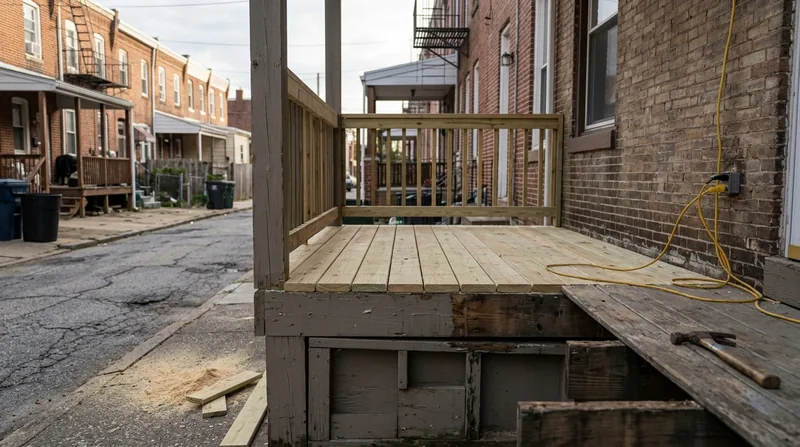




Deck & Porch Repair in Philadelphia means keeping the outdoor spaces that define neighborhood life safe and solid through seasons of freeze-thaw cycling and summer humidity. Philadelphia's dense rowhouses, Victorian twins, and detached frame homes from the 1900s through the 1950s often feature wooden decks, wraparound porches, and back-porch additions built to last, but the region's changeable Mid-Atlantic climate, hot humid summers followed by cold snowy winters and occasional nor'easters, takes a real toll on exposed wood. Frost heave, water infiltration into posts and joists, rot in stair stringers and railings, and sagging floors are the pathologies we see most often. We replace rotted boards, posts, and railings, repair structural framing and stairs, and get outdoor spaces safe and solid. Repair comes first when the wood justifies it; replacement is the honest answer when it doesn't.
Why Deck & Porch Repair Matters in Philadelphia's Climate
Philadelphia sits on flat-to-gently-rolling terrain between the Delaware and Schuylkill Rivers, with a climate that cycles from sweltering humidity in July and August to hard freezes and occasional snow in winter. That freeze-thaw cycle is the enemy of wooden decks and porches. Water enters grain and joints, expands when it freezes, and splits boards and posts. Older porches on South Philly rowhouses, Fishtown trinity homes, and Germantown Victorians were built with solid framing, but decades of exposure without proper maintenance lead to soft spots, splintered railings, and structural settling. A sagging porch or loose railing isn't just cosmetic, it signals that the underlying joists, posts, or ledger board are compromised and need attention before someone gets hurt.
- Inspect posts and support beams for soft wood, checking with a screwdriver or awl for penetration that signals rot.
- Look for water stains or dark discoloration on joists and ledger boards where moisture accumulates and decay begins.
- Test stair treads and railings by applying lateral pressure; movement or flex indicates loose fasteners or rotted stringers.
- Check for gaps between boards or between the porch deck and the house rim joist where water pools and freezes.
- Examine the base of posts where they contact the ground or concrete, the highest-risk zone for wood rot in Philadelphia's wet winters.
These signs mean the time to act is now, before rot spreads into the substructure or a structural failure creates a safety hazard.
Key info: Philadelphia's L&I Department requires permits for structural work on decks and porches, including post replacement, joist repair or replacement, and railing installation or repair. Check with your local building department or the City of Philadelphia L&I website before starting work to confirm what needs approval in your neighborhood.
How We Repair Decks & Porches in Philadelphia: Our Process
We start with a thorough walkthrough and documentation of what we find. We test wood with hand tools, measure settlement and slope, and photograph the damage so you understand what's happening and why. Then we build a repair plan that addresses the root cause, usually water intrusion or frost heave, not just the visible rot. If a post is soft at the base but sound above, we sister a new pressure-treated post alongside it or replace the damaged section. If a ledger board has pulled away from the house rim joist, we reset it with proper flashing and fasteners. If stair stringers are rotted, we replace them. We work from the ground up, making sure the foundation of your outdoor space is solid before we touch the finish boards and railings.
- Visit the site, test all structural members, and document rot, settlement, and water damage with photos.
- Propose a repair plan that explains what's wrong, what we'll fix, and why that approach protects your investment.
- Obtain any required permits from the City of Philadelphia or your local building department before beginning work.
- Remove damaged boards, posts, or framing, taking care to support the structure during demolition so nothing shifts or fails.
- Install new pressure-treated posts, joists, and stringers, fastening them to code with galvanized or stainless hardware.
- Reattach the ledger board with flashing and proper spacing to the house rim joist, ensuring water runs away and doesn't pool.
- Install new decking, stairs, and railings, matching the original profile and finish where the homeowner wants continuity.
- Final walkthrough, cleanup, and a clear explanation of what we've done and how to keep the porch dry going forward.
A typical porch post replacement in a Fishtown rowhouse or Upper Darby twin takes one to two days, depending on access and how much of the surrounding structure needs temporary bracing.
Real example: A South Philadelphia rowhouse porch had two rotted front posts at the street line. The ledger board had also pulled away from the house, creating a gap where water was running into the rim joist. We sistered two new pressure-treated posts, reset the ledger with metal flashing, and replaced the rotted rim joist section. The porch was stable again, and the water stopped. Total time: one and a half days. The homeowner kept the original balusters and railings, so the curb appeal stayed intact.
For more information on how we approach structural wood repair across your home, see our page on wood rot and dry rot repair.
| Repair Approach | Description | Best for |
|---|---|---|
| Sistering | Install a new pressure-treated post or joist alongside the rotted one, fastening them together so they act as a single member. | Posts with rot in the lower third, joists that are sound except for a soft section, and situations where the structure must stay open during repair. |
| Partial Replacement | Cut out the rotted section of a board or joist and install a new pressure-treated piece, fastening it to the sound wood with staggered screws or bolts. | Ledger boards, rim joists, and deck boards where only one section is compromised and the rest of the member is solid. |
| Full Member Replacement | Remove the entire post, joist, or stringer and install a new pressure-treated member, fastening it to the ledger, beam, or foundation with galvanized hardware. | Stair stringers, support posts that are soft throughout, and joists where rot has spread across most of the depth or width. |
| Ledger Board Reset | Remove the ledger, install flashing behind it to direct water away from the rim joist, and reattach it with stainless or galvanized fasteners spaced to code. | Porches and decks where water is pooling between the ledger and the house, or where the ledger has separated and created a gap. |
| Railing & Balusters | Replace individual rotted balusters, newel posts, or rail sections while keeping the original pattern and profile if the homeowner wants continuity. | Victorian and period porches in Germantown, Chestnut Hill, and the Main Line where the original railings have architectural value. |
Deck & Porch Repair Cost in Philadelphia: What to Expect
Deck and porch repair in Philadelphia starts at around $900 for straightforward work like replacing a single rotted post or repairing a small section of ledger board. A full porch post replacement with ledger reset and flashing typically runs $2,500 to $4,500, depending on how much of the structure is compromised and whether the rim joist needs work. Stair repair or replacement can range from $1,200 for a few rotted treads and balusters to $3,500 or more if the stringers are damaged and need to be replaced. The main factors that move the cost up are the number of posts or joists involved, whether the rim joist or house framing is affected, how much temporary bracing and support is needed during demolition, and whether the original materials are pressure-treated or require matching to historic wood species.
We always get the job site inspected and documented before giving you a number. A porch that looks like it needs one post replacement might reveal a soft rim joist or ledger board once we open it up, which changes the scope. That's why we include a free estimate and respond within 24 hours. Call us at (267) 477-7458 or visit our pricing page for more detail on how we structure estimates and what factors drive the final cost.
Two to three estimates from different contractors are always smart. You'll see variation in scope and price, and that's normal. What matters is that the contractor explains what they're fixing and why, not just what it costs.
Deck & Porch Repair Near Me: What Philadelphia Homeowners Should Know When Hiring a Carpenter
When you're looking for a carpenter to repair your porch or deck, start by checking that they're fully insured and registered with the Pennsylvania Home Improvement Contractor Board. Ask for references from recent porch and deck repairs in your neighborhood, Fishtown, South Philadelphia, Germantown, or wherever you are, and call at least two of them. A good carpenter will walk you through the damage, explain what's causing it, and tell you honestly whether repair or replacement makes sense. They'll also know the permit requirements for your area. Philadelphia and many surrounding municipalities require permits for structural deck and porch work, so don't hire someone who skips that step.
Ask whether the contractor has experience with the specific issues you're seeing. Rot in a ledger board is different from rot in a support post, and a stair repair is different from a full porch rebuild. If the porch is historic or part of a row, ask about matching original materials or profiles. Some homeowners in Society Hill or Old City want continuity; others just want solid and safe. Know what you want before you call.
Get the estimate in writing and make sure it spells out what's being removed, what's being installed, what materials are being used, and what the timeline is. If the contractor says they'll know more once they open it up, that's honest, but they should give you a range and a process for handling scope changes. For help finding the right contractor and getting started, contact us for a free estimate.
Deck & Porch Repair in Philadelphia: Pricing Guide
| Service | Price | Details |
|---|---|---|
| Single post replacement | Starting at $900 | Includes removal, sistering or replacement, fastening, and basic flashing. Factors affecting price: post height, access, and whether rim joist needs repair. |
| Ledger board reset with flashing | Starting at $1,200 | Includes removal, installation of metal flashing, reattachment with galvanized fasteners to code. Price increases if rim joist is soft and requires partial replacement. |
| Stair repair or replacement | Starting at $1,500 | Includes removal of rotted treads, balusters, or stringers, and installation of new pressure-treated members. Full stringer replacement costs more than individual tread repair. |
| Full porch structural rebuild | On estimate | Multiple posts, joists, ledger, and stairs all compromised. Requires site visit, documentation, and permit review before pricing can be accurate. |
| Travel and estimate | Free estimate, included travel | No call-out fee or mileage charge in Philadelphia and surrounding service areas. Response within 24 hours at (267) 477-7458. |
Indicative pricing, the exact cost depends on square footage, finish, and site access. Free personalized estimate within 24h at (267) 477-7458.


