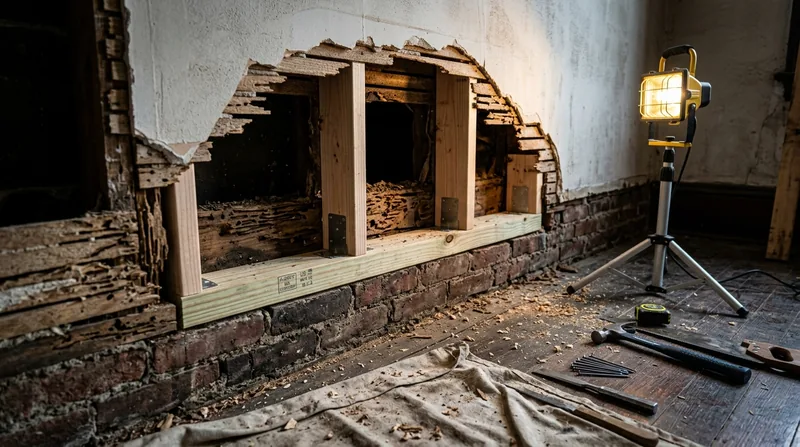




Termite damage in Philadelphia rowhouses and frame homes doesn't end when the pest inspector leaves. After termites have tunneled through studs, sills, joists and trim, the structural integrity of those members is compromised, and the wood must be replaced. We replace termite-damaged framing, floor joists, subfloor sections, and exterior trim, restoring full load-bearing capacity and preventing further settlement or failure. Philadelphia's dense stock of 1900s-1950s rowhouses in South Philly, Fishtown, and Kensington, as well as wider Victorian twins and frame houses in Germantown and Mount Airy, all contain century-old wood framing that termites find attractive. Once a pest inspection report confirms the damage, termite damage repair becomes a carpentry job, and that's where we step in.
Why Termite Damage Repair Matters in Philadelphia Rowhouses and Frame Homes
Philadelphia's residential building stock is almost entirely wood-framed or wood-detailed, even the brick rowhouses. Exterior trim, interior studs, floor joists, sills, and rim joists are all vulnerable to termite attack, particularly in the humid Mid-Atlantic summers and where water intrusion or poor drainage have softened the wood. A termite colony can consume structural wood over months or years, and by the time an inspection report arrives, the damage is often widespread. Replacing affected members restores the home's structural stability and prevents accelerated decay, sagging floors, or movement in walls and door frames.
- We remove and replace termite-eaten studs in exterior walls, partition walls, and load-bearing frames, sistering new lumber alongside damaged sections or replacing entire members as needed.
- We replace damaged floor joists and subfloor sections, restoring load capacity and eliminating springy or sagging floors.
- We replace sill plates, rim joists, and band board where termites have compromised the connection between foundation and frame.
- We replace exterior trim, fascia, soffit, and window or door casing damaged by termite tunneling.
- We work from your pest inspection report and do not perform pest treatment, fumigation, or extermination, which are separate licensed trades.
Once the damaged wood is gone and replaced with sound lumber, the structural pathology is resolved and the home is safe to occupy.
Key info: Termite damage in Philadelphia is often discovered during a home sale inspection or when a homeowner notices a sagging floor, sticky door, or visible termite galleries in basement rim joists. The pest inspector identifies the extent of the damage; we measure it, specify replacement lumber, and execute the repair. In historic neighborhoods like Society Hill or Chestnut Hill, we coordinate with local preservation guidelines where applicable.
For more detail on wood damage assessment and repair philosophy, see our wood rot and dry rot repair page. The diagnostic and repair approach is identical, regardless of whether the damage was caused by termites, water, or fungal decay.
How We Repair Termite Damage: Step-by-Step Process
Our repair process begins with your pest inspection report and a site visit to measure and document the affected members. We identify which wood can be repaired (rarely, in termite cases) and which must be replaced. We then obtain any required permits from the Philadelphia Building Department or your local jurisdiction, especially if the work involves load-bearing walls or structural changes. Once permits are in place, we remove the damaged wood, install temporary bracing if needed to support loads, and install new lumber to match the original species and dimension where possible.
- We inspect the damage on-site, photograph it, and cross-reference your pest report to confirm scope and location.
- We determine whether the Philadelphia Building Department or your local code authority requires a permit for structural repair (most termite damage repair does not, but load-bearing member replacement may).
- We remove termite-damaged wood, taking care to protect adjacent finishes and not disturb any active pest control measures your exterminator has installed.
- We install new pressure-treated or solid lumber to replace joists, studs, sills, and rim joists, ensuring proper nailing, blocking, and connection to existing framing.
- We replace exterior trim and finish carpentry to match the original profile and paint or stain to match existing work.
- We document the completed repair with photographs and a summary for your records and insurance claim.
The entire process, from inspection to completion, typically takes one to three weeks depending on scope and permit requirements.
Example: A rowhouse in Kensington with termite damage to three floor joists under the second floor, discovered during a home inspection. We remove the three joists, install temporary support posts, cut and install three new pressure-treated joists, and restore the subfloor. The job takes three days and costs approximately $2,400. A similar job in a Victorian twin in Mount Airy, where four joists and the rim board need replacement, costs $3,800 and takes four days.
Termite Damage Repair Methods and When to Use Each
| Approach | Description | Best for |
|---|---|---|
| Full Member Replacement | Remove the entire stud, joist, or trim piece and install new lumber of the same dimension and species. | Joists, studs, sills, and structural members where more than 30% of the cross-section is damaged. |
| Sistering | Install a new piece of lumber alongside a damaged member and bolt or nail them together to share the load. | Joists or studs where damage is limited to one side or where full removal is not practical without temporary support. |
| Localized Patch and Epoxy | Cut out the damaged section and glue in a new piece of solid wood, or apply structural epoxy to stabilize the remaining wood. | Trim, casing, fascia, or non-structural members where damage is small and the member can be retained. |
| Pressure-Treated Replacement | Install new pressure-treated lumber for joists, sills, or rim joists to reduce future termite and rot risk. | Sill plates, rim joists, and joists in basements or crawl spaces where moisture is a recurring issue. |
The method we choose depends on the location of the damage, the load it carries, and the cost-benefit of repair versus replacement. In most Philadelphia homes, full member replacement is the honest and durable answer.
Termite Damage Repair Cost in Philadelphia: What to Expect
Termite damage repair in Philadelphia typically starts at $1,200 for a small, localized repair, such as replacing a single floor joist or repairing a short section of rim board. Larger jobs, such as replacing multiple joists, studs, or extensive trim, range from $2,000 to $5,000 or more. The cost depends on the number and size of members that need replacement, their accessibility, whether temporary support is required, permit and inspection fees, and the species of replacement lumber. Getting two or three estimates before committing gives you a realistic sense of the scope and lets you compare approaches.
We provide a free estimate within 24 hours. During the estimate, we measure the damage, review your pest inspection report, and specify the replacement method and materials. We also advise whether the Philadelphia Building Department or your local code authority requires a permit. Once you approve the estimate, we schedule the work and provide a timeline. See our pricing page for a more detailed breakdown of costs by job type.
If you are pursuing an insurance claim for termite damage, we can provide photographs, measurements, and a detailed repair estimate to support your claim. We do not guarantee claim approval or coverage, and we do not absorb or waive deductibles, but we document the damage clearly so your insurer has the information needed to assess it.
Termite Damage Repair Near Me: What to Look for When Hiring a Carpenter in Philadelphia
Hiring a carpenter for termite damage repair is a structural decision, and it pays to be deliberate. Look for a contractor who is fully insured and can provide references from recent termite damage or wood repair projects. Ask whether they have experience with Philadelphia's specific building types, such as rowhouses with party walls, or older frame homes with dimensional lumber that may no longer be standard. Get at least two estimates and compare not just price but the method proposed, the timeline, and whether the contractor explains why they recommend replacement over repair. If the job involves a load-bearing member, confirm that the contractor understands local code requirements and will obtain a permit if needed.
- Confirm the contractor is fully insured and can provide a current certificate of insurance before work begins.
- Ask for references from at least two termite damage or wood repair jobs completed in the past 12 months.
- Request a detailed written estimate that specifies the members to be replaced, the method, the lumber species, and the timeline.
- Verify that the contractor understands whether your job requires a permit from the Philadelphia Building Department or your local code authority.
- If you live in a historic district or have an HOA, ask whether the contractor has experience navigating design review or approval requirements for visible repairs.
- Call the contractor's references and ask specifically about the quality of the repair, whether the work stayed on schedule, and whether the contractor was respectful of the home during the job.
Philadelphia Carpentry has been in business since 2016 and has completed termite damage repair in rowhouses, twins, and frame homes throughout Philadelphia, Cherry Hill, Camden, Upper Darby, and the surrounding areas. We provide a free estimate by phone at (267) 477-7458 or through our contact page. We are fully insured and can provide references and photographs of completed work.
Termite Damage Repair in Philadelphia: Pricing Guide
| Service | Price | Details |
|---|---|---|
| Single joist or stud replacement | Starting at $1,200 | One floor joist or wall stud removed and replaced with new lumber, includes temporary support and finish carpentry |
| Multiple joists or sill plate repair | Starting at $2,400 | Two to four floor joists, rim board, or sill plate replacement, includes bracing, permit coordination, and paint or stain |
| Extensive framing or trim damage | Starting at $3,800 | Five or more members, exterior trim, fascia, or complex repairs requiring temporary support and multiple days on site |
| Complex structural repair or load-bearing wall member | On estimate | Replacement of load-bearing studs, headers, or beams may require engineer review and permit; site inspection needed |
| Travel | Included | No separate travel or mileage fee in Philadelphia and surrounding service areas |
| Free estimate | Free | Response within 24 hours at (267) 477-7458; no obligation to book if estimate does not meet your needs |
Indicative pricing, the exact cost depends on square footage, finish, and site access. Free personalized estimate within 24h at (267) 477-7458.


