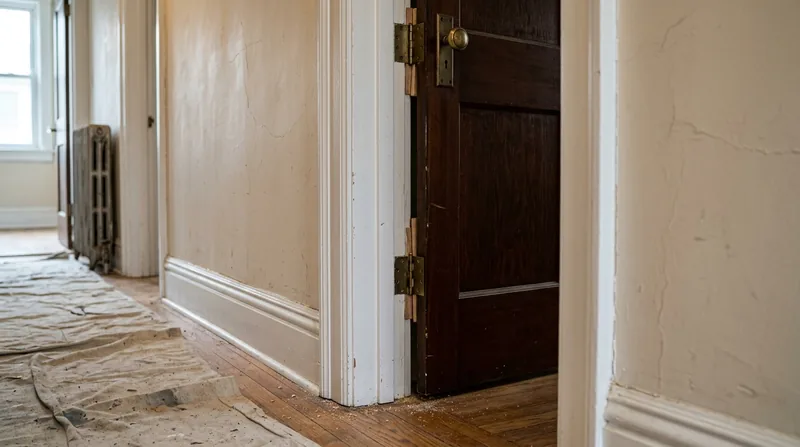




Interior Door Installation & Repair in Philadelphia is a bread-and-butter service in a city where century-old rowhouses settle, shift, and pull their door frames out of square. A door that sticks in summer humidity, swings open on its own, or never latched right is not a minor inconvenience in a narrow Fishtown trinity or a South Philadelphia twin, it signals that the building has moved, and the frame with it. We hang, adjust, and replace interior doors, repair jambs and frames, and install pocket and barn doors for homeowners across Philadelphia, Cherry Hill, and the surrounding towns. Unlike a quick handyman fix, we diagnose why the door failed in the first place, work with the existing frame whenever the wood is sound, and replace it when repair is no longer honest. Most of our interior door work happens in the off-season, when homeowners have time to think about comfort and finish work rather than emergency structural repairs.
Why Interior Door Installation & Repair Matters in Philadelphia Rowhouses
Philadelphia's dense rowhouse neighborhoods, from Kensington to Germantown to the historic Old City, sit on flat to gently rolling ground between the Delaware and Schuylkill Rivers. These buildings, many constructed between 1900 and 1950, rest on shallow foundations and shift seasonally as soil moisture changes and as the wood framing ages. A door frame that hung plumb in 1920 may be out of square by a quarter inch or more after a century of movement. Interior doors bear the visible cost of this settlement: they stick in humid summers, they swing open on their own, the latch bolt no longer catches the strike plate, or they bind in the upper corner. Getting a door to work smoothly again often requires understanding the frame, not just replacing the slab.
- Doors that stick or bind are usually a sign the frame has racked (twisted) or shifted, and adjusting the hinge shims or planing the edge is often the right first move.
- A door that swings open on its own indicates the floor or frame is no longer level, and shimming or adjusting the closer may solve it without a full replacement.
- Damaged or rotted door jambs, common in older bathrooms and kitchens where moisture accumulates, require jamb replacement or repair to the affected section.
- Pocket doors and barn doors are popular upgrades in tight Philadelphia kitchens and bedrooms where a swinging door wastes floor space.
- Strike plates, hinges, and latches wear out and can be replaced without disturbing the frame or the door itself.
Understanding the root cause before replacing the door saves money and respects the original craftsmanship in older Philadelphia homes.
Key info: Philadelphia's City of Philadelphia L&I requires permits for structural alterations and load-bearing wall work, but interior door installation and repair typically do not trigger permitting unless the work involves removing a wall or altering a fire-rated door. Always check with your local building department before starting, especially in historic districts or if your property is listed on the Philadelphia Register of Historic Places.
How We Approach Interior Door Installation & Repair in Philadelphia
Our process starts with a site visit to understand how the door is failing and why. We measure the frame, check for level and plumb, inspect the hinges and hardware, and look at the surrounding walls and floors for signs of settlement or moisture. If the frame is sound and the door just needs adjustment, we shim the hinges, plane the edge, or move the strike plate. If the frame is damaged or rotted, we cut out the bad section and sister in new wood, or replace the entire jamb assembly if the damage is extensive. For new installations, we hang the door true to the rough opening, set the hinges, and install the casing and hardware so the door swings and latches smoothly.
- We inspect the door, frame, hinges, and strike plate, and measure for level and plumb to identify what is actually causing the problem.
- We plane, sand, or adjust the door and hinges to restore smooth operation if the frame is square and the wood is sound.
- We repair or replace the jamb or frame if rot, moisture damage, or severe racking has made adjustment impossible.
- We install new interior doors, pocket doors, or barn doors, setting hinges and hardware so the door operates smoothly and latches reliably.
- We finish the casing and trim around the frame so the installation blends with the existing woodwork and finish.
Every interior door job is different because every Philadelphia rowhouse has moved differently, and we work to the specifics of your building, not a generic checklist.
Local example: A 1920s twin in Upper Darby with a bedroom door that swings open on its own. The floor had settled about a quarter inch over the decades. We shimmed the bottom hinge and adjusted the top hinge, and the door now stays closed. Cost was under $200 and took two hours. Replacement would have cost ten times that and been unnecessary.
Interior Door Installation & Repair Methods and Approaches
| Approach | Description | Best for |
|---|---|---|
| Hinge adjustment and shimming | Remove the door, shim the hinges, and rehang it to restore plumb and level operation. | Doors that stick or swing open due to frame settlement or hinge wear. |
| Edge planing and sanding | Plane or sand the top, bottom, or sides of the door to restore clearance and smooth operation. | Doors that bind in specific spots or rub against the frame. |
| Strike plate relocation and latch repair | Move the strike plate, adjust the latch bolt, or replace worn hardware to restore latching. | Doors that no longer catch or latch reliably. |
| Jamb repair and replacement | Cut out rotted or damaged jamb sections and sister in new wood, or replace the entire jamb assembly. | Doors with moisture damage, rot, or severe frame damage. |
| New door installation | Hang a new interior door, set hinges, install hardware, and finish the casing and trim. | Replacing a damaged or outdated door, or installing a pocket or barn door. |
| Pocket and barn door installation | Install a pocket door or sliding barn door to save space and add visual interest to a room. | Small bedrooms, bathrooms, or kitchens where a swinging door wastes valuable floor space. |
Interior Door Installation & Repair Cost in Philadelphia: What to Expect
Interior door work in Philadelphia typically starts at $350 for a simple hinge adjustment or strike plate relocation, and ranges from there depending on the scope. A door that needs planing and shimming to restore smooth operation may run $200 to $400. Replacing a damaged jamb section or the entire jamb assembly usually costs between $600 and $1,200, depending on the extent of the damage and the finish carpentry required. Installing a new interior door, including hanging, hardware, and casing, typically runs $800 to $1,500. Pocket doors and barn doors cost more because of the track hardware and the framing work involved, usually $1,200 to $2,000. The main factors that affect cost are the extent of frame damage, whether the existing frame can be repaired or must be replaced, the finish carpentry required to match existing trim, and the complexity of the installation.
Getting two or three estimates before committing is always smart. Call us at (267) 477-7458 for a free, no-obligation estimate, and we will walk you through what we find and what it costs to fix it. Visit our pricing page for a detailed breakdown of common door repair and installation scenarios.
Interior Door Installation & Repair Near Me: What Philadelphia Homeowners Should Know When Hiring a Carpentry Contractor
When you are looking for a carpenter to hang a door, repair a frame, or install a pocket door in Philadelphia, focus on a few concrete things. First, confirm that the contractor is fully insured and carries general liability and workers' compensation coverage. Ask for references from recent Philadelphia-area jobs and follow up with them. Get at least two estimates in writing, and make sure each one describes what is being repaired or replaced, not just a flat price. If your property is in a historic district or listed on the Philadelphia Register of Historic Places, ask whether the contractor has experience working within those guidelines. Understand whether your door work needs a permit from the City of Philadelphia L&I. Most interior door installation and repair does not require a permit, but it is worth confirming with your local building department before you start.
A professional carpentry contractor will explain why your door is failing, show you the damage if there is any, and tell you honestly whether repair or replacement is the right call. If you want to learn more about our approach to carpentry and structural repair, visit our finish carpentry page, and feel free to contact us for a free estimate.
Interior Door Installation & Repair in Philadelphia: Pricing Guide
| Service | Price | Details |
|---|---|---|
| Hinge adjustment, shimming, or strike plate relocation | Starting at $350 | Restoring a door that sticks, swings open, or no longer latches due to frame settlement or hinge wear |
| Door planing, sanding, or edge work | Starting at $250 | Removing binding or rub spots on the door edge or face to restore smooth operation and clearance |
| Jamb repair or partial jamb replacement | Starting at $600 | Replacing rotted or damaged door jamb sections or the entire jamb assembly, including finishing and casing |
| New interior door installation | Starting at $800 | Hanging a new door, setting hinges, installing hardware, finishing casing and trim to match existing woodwork |
| Pocket door or barn door installation | Starting at $1,200 | Installing sliding pocket or barn door hardware, framing, hanging the door, and finishing trim and hardware |
| Free estimate | No charge | Response within 24 hours at (267) 477-7458, includes site visit, diagnosis, and written scope and price |
Indicative pricing, the exact cost depends on square footage, finish, and site access. Free personalized estimate within 24h at (267) 477-7458.


