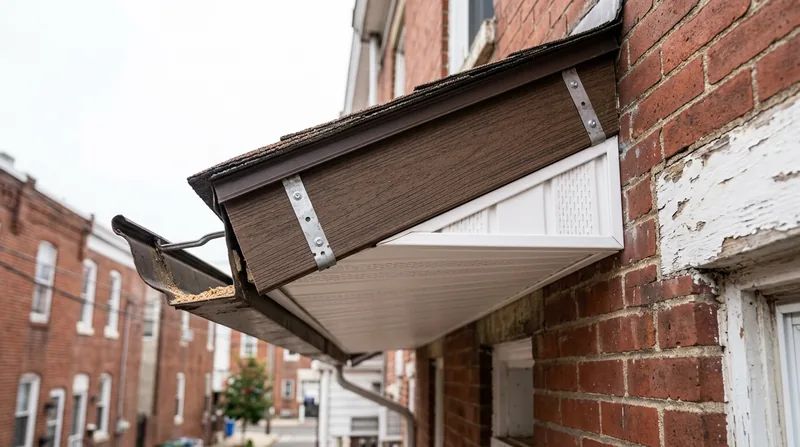




Fascia, Soffit & Exterior Trim Repair in Philadelphia is one of the most overlooked maintenance tasks on rowhouses, twins, and Victorian frame homes across South Philly, Fishtown, Germantown, and the Main Line suburbs. Peeling paint and soft fascia boards are the first sign that rot has started moving through the roofline, and once moisture gets behind the trim, it spreads quickly through the soffits, into the rafter tails, and down the exterior walls. Philadelphia's changeable Mid-Atlantic climate, with hot humid summers, cold snowy winters, and the occasional nor'easter, cycles wood through expansion and contraction year after year, opening the seams where water finds its way in. We replace fascia, soffits, and exterior trim with primed, rot-resistant material, closing the gaps that let moisture and pests inside. The work is straightforward carpentry, but the difference between a temporary patch and a repair that lasts 20 years comes down to material choice, flashing detail, and understanding how water actually moves across a Philadelphia roofline.
Why Fascia and Soffit Rot Accelerates in Philadelphia's Climate
The roofline is where the building envelope fails first. Fascia boards take the brunt of weather exposure, and soffits trap moisture when gutters back up or ventilation is blocked. In Philadelphia, the freeze-thaw cycle of winter is particularly hard on wood that isn't sealed properly. Water enters through cracks in paint, sits in the grain, freezes, and splits the board further. The humid summers then accelerate rot fungi, which thrive in the damp wood. Once soft spots appear, the damage spreads fast because the roofline is the gateway to the rafter tails, blocking boards, and the interior framing.
- Fascia boards fail fastest because they face weather directly and carry gutters that can trap water against the wood.
- Soffits rot when ventilation is inadequate or when the soffit itself is solid wood without proper flashing at the roof edge.
- Exterior trim and blocking around siding, windows, and doors rots when caulk cracks or paint fails, letting water seep into end grain.
- Once rot starts, it spreads into the rafter tails and rim joist, which can lead to structural issues and pest entry if left unaddressed.
Catching the problem early, when the boards are still mostly sound, means we can replace the affected sections and seal the detail properly instead of dealing with structural damage later.
Key info: In Philadelphia rowhouses from the 1900s-1950s, the fascia and soffit are often original wood, sometimes redwood or Douglas fir, and they've been painted over many times. The paint layers actually trap moisture, accelerating rot underneath. We strip, assess the wood, and replace only what's soft, using primed cellular PVC or treated lumber that won't rot again.
For more on how moisture and wood pathology work together, see our guide to Wood Rot and Dry Rot Repair.
How We Replace Fascia, Soffit & Exterior Trim in Philadelphia
The work starts with a close inspection of the roofline. We tap the boards with a hammer, look for soft spots and paint failure, and check the flashing where the trim meets the roof or siding. If the rot is surface-level and the underlying structure is sound, we can often repair by cutting out the bad section, sistering in new wood, and sealing everything properly. If the board is compromised along most of its length, replacement is the honest answer. We work from a lift or ladder, remove the old trim carefully to avoid damaging the roof or siding, and install new material with proper flashing, caulk, and primer.
- We inspect the full roofline, including gutters, flashing, and soffit venting, to identify where water is actually entering.
- We remove old fascia, soffits, and trim without disturbing the roof sheathing or siding underneath.
- We install new material primed and ready to paint, with proper flashing at the roof edge and siding interface.
- We seal all joints and caulk details to prevent water from re-entering the same gaps.
- We coordinate with your gutter contractor or handle gutter reinstallation if needed to ensure the new trim works with the water management system.
The entire job typically takes one to three days depending on the length of roofline and the extent of rot.
Example: A Victorian twin in West Philadelphia had 45 feet of original redwood fascia with peeling paint. We found soft rot in about 30 percent of the board length, mostly around the roof edge where flashing had failed. We sistered in new pressure-treated lumber in the soft sections, sealed the flashing detail with modern sealant, and primed everything for the owner to paint. Total cost was under $1,500 because the structure underneath was still solid and we didn't need to replace the entire board.
See our full service menu at Finish & Trim Carpentry for other exterior trim work.
Repair Methods and Material Options
| Approach | Description | Best for |
|---|---|---|
| Sistering (Partial Repair) | Cut out the soft section and scarf or butt in new pressure-treated or cellular PVC material, sealing the joint with caulk and primer. | Fascia or soffit boards that are mostly sound with rot in 20-40 percent of the length; preserves original material where possible. |
| Full Board Replacement | Remove the entire fascia, soffit, or trim board and install new primed lumber or PVC, with flashing and caulk at all joints. | Boards that are soft or compromised along most of their length, or where the original material is so old that matching grain or thickness is impractical. |
| Cellular PVC Fascia | Factory-primed PVC boards that will never rot, splinter, or need repainting; slightly higher material cost but zero maintenance for 30+ years. | Homeowners who want to eliminate future roofline maintenance; works on any home, traditional or modern. |
| Pressure-Treated Lumber | Standard repair material; primed and paintable; will last 20-30 years with proper paint maintenance and good flashing detail. | Budget-conscious repairs where the homeowner is committed to repainting every 5-7 years and maintaining gutters and flashing. |
| Redwood or Cedar (Repair Match) | If original fascia or trim is premium wood, we can source matching species for visible sections to maintain the home's original character. | Historic homes, properties in Old City or Society Hill, or homeowners who value the appearance and durability of genuine wood. |
Fascia, Soffit & Exterior Trim Repair Cost in Philadelphia: What to Expect
Roofline repair in Philadelphia typically starts at $700 for a single-story section with limited rot and good access. The cost rises with the length of roofline, the percentage of material that needs replacement, and the complexity of the flashing detail. A full fascia replacement on a 40-foot rowhouse or twin can run $1,500 to $3,500 depending on whether you choose pressure-treated lumber or cellular PVC and whether the soffit needs work as well. Access matters too: if we need a lift or extended ladder setup, the job takes longer. Material choice is the biggest variable. Cellular PVC costs more upfront but eliminates painting and future rot risk, which many homeowners find worth the investment over 20 years.
We always recommend getting two or three estimates so you understand the scope and material options. Some contractors will quote replacement when repair is still viable, and others will use cheap materials that fail in five years. The difference between a $1,200 job and a $3,000 job often comes down to whether the estimate includes proper flashing, primer, and caulk detail or just the raw lumber and labor.
For a detailed pricing breakdown and to discuss your specific roofline, visit our pricing page or call us at (267) 477-7458 for a free estimate.
Fascia, Soffit & Exterior Trim Repair Near Me: What Philadelphia Homeowners Should Know When Hiring a Contractor
Finding the right carpenter for roofline work means looking for someone who understands the detail, not just the labor. Ask whether the contractor will inspect the flashing and gutter system, not just the visible fascia. Ask what material they recommend and why. Get references from recent roofline jobs in Philadelphia and call them to ask whether the work has held up and whether the contractor was responsive to detail questions. Fully insured contractors should carry general liability and workers' compensation; ask to see the certificate before work starts. Some roofline work may require permits if you live in a historic district or have HOA restrictions, so confirm that your contractor is familiar with Philadelphia's building department and any local review processes.
- Check that the contractor inspects the full roofline, including gutters, flashing, and soffit venting, before quoting the job.
- Ask for references from homeowners in Philadelphia who had similar roofline work done in the past two years.
- Confirm that the estimate includes material (fascia, soffit, trim, flashing, caulk, primer) and labor, and that the contractor will coordinate with your gutter contractor if needed.
- Verify that the contractor is fully insured and willing to provide a certificate of insurance before starting work.
- If your home is in a historic district or subject to HOA architectural review, confirm that the contractor is familiar with those requirements and will submit plans if needed.
We handle all of these details as a standard part of the estimate and job process. When you call us at (267) 477-7458, we'll schedule a free site visit to assess your roofline and discuss material and repair options with no obligation to book.
Ready to get started? Contact us for a free estimate.
Fascia, Soffit & Exterior Trim Repair in Philadelphia: Pricing Guide
| Service | Price | Details |
|---|---|---|
| Single fascia or soffit section repair | Starting at $700 | Includes inspection, sistering or partial replacement, flashing, caulk, and primer for roofline under 30 feet |
| Full fascia or soffit replacement on rowhouse or twin | Starting at $1,500 | Complete replacement of fascia and soffit on 40-50 foot roofline with proper flashing, caulk, and paint-ready primer |
| Cellular PVC fascia replacement | Starting at $2,200 | Primed PVC boards that never rot or need painting, including flashing and caulk, for 40-50 foot roofline |
| Roofline assessment and repair plan | Free | On-site inspection of fascia, soffit, flashing, and gutter system with written repair estimate and material options |
| Large or complex roofline with multiple issues | On estimate | Includes gutter coordination, flashing replacement, soffit venting, or structural blocking that requires site assessment |
| Travel and site visit | Included | No mileage fee or travel charge for Philadelphia and surrounding service areas; free estimate within 24 hours |
Indicative pricing, the exact cost depends on square footage, finish, and site access. Free personalized estimate within 24h at (267) 477-7458.


