Dry Rot vs Termite Damage: Why the Difference Matters
If you own a rowhouse in Philadelphia, you've probably worried about wood damage at some point. The city's older housing stock, combined with humid summers and damp basements, creates the perfect environment for both dry rot and termite infestations. But here's the thing: these two problems require completely different solutions. Misidentifying the damage could mean spending thousands on the wrong repair, or worse, letting the real problem continue destroying your home's structure.
The key difference is biological. Termites are living insects that actively eat wood as they tunnel through it, while dry rot is a fungal decay caused by moisture and poor ventilation. Understanding which pest or condition is damaging your home is the first step toward protecting your investment and your family's safety. Let's break down how to tell them apart.
What Does Wood Rot Look Like? Identifying Dry Rot Damage
Dry rot, despite its name, thrives in damp conditions. It's caused by a fungus that breaks down the cellulose in wood, turning solid timber into a crumbly, weakened material. When you're inspecting your Philadelphia home for dry rot, look for wood that appears shrunken, darkened, or has deep cracks running across the grain in a cube-like pattern. This distinctive cracking is one of the most reliable visual signs of dry rot.
The texture of rotted wood is another telltale indicator. If you press a screwdriver or awl into suspect wood and it sinks in easily, the wood has likely been compromised by dry rot. You might also notice a musty, earthy smell coming from affected areas, particularly in basements, crawl spaces, or around windows and doors where moisture accumulates. Dry rot often appears as a grayish or reddish powder or fruiting body on the wood surface. Unlike termite damage, dry rot damage is typically confined to one area and doesn't spread as rapidly through a structure, though it can eventually cause serious structural problems if left untreated.
Signs of Termite Damage in Wood: What to Look For
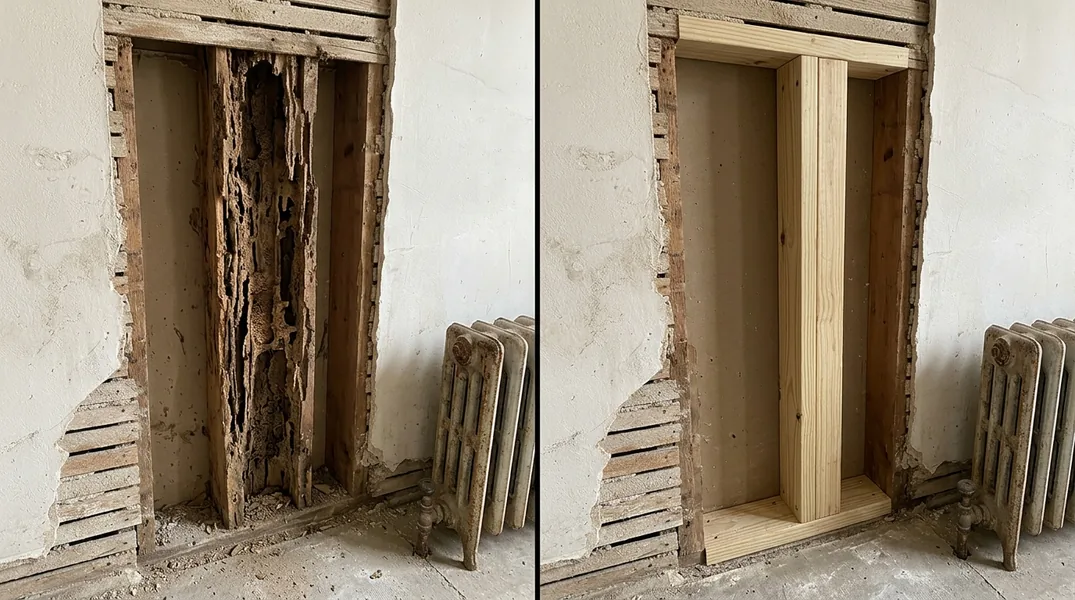
Termites are far more aggressive than dry rot because they're living creatures actively feeding on your wood 24/7. The damage pattern is distinctly different. Termites create hollow galleries or tunnels inside the wood, eating along the grain and leaving the outer shell intact. This means a piece of wood infested with termites might look fine on the surface but be completely hollowed out inside. If you tap on wood with termite damage, it will sound hollow and may collapse under pressure.
Another key sign of termite damage is the presence of mud tubes. Subterranean termites, which are common in the Northeast, build these protective tunnels from soil to wood. You'll often find these pencil-sized tubes running along basement walls, foundation cracks, or crawl space supports. You might also notice termite droppings, which look like tiny pellets or sawdust piles beneath infested wood. Unlike dry rot, termite damage typically spreads quickly and systematically through a structure, following wood grain and potentially affecting multiple areas of your home. If you suspect termites, time is critical because they can cause extensive structural damage in just a few years.
Key Differences: Moisture, Speed, and Spread Patterns
Understanding how these two problems behave differently can help you narrow down what's affecting your home. Dry rot requires constant moisture to survive, so it's typically concentrated in areas with poor drainage, ventilation problems, or water intrusion. Once the moisture source is eliminated, dry rot stops spreading. Termites, on the other hand, can travel considerable distances through soil and mud tubes to access wood, and they'll continue feeding regardless of moisture levels in that specific area.
The speed of damage also differs significantly. Dry rot can take months or even years to cause severe structural damage, though the deterioration accelerates once it becomes established. Termites, by contrast, can cause noticeable damage in just one to two years, especially if the colony is large. When examining damage patterns, dry rot typically creates a confined area of weakness, while termite damage often appears in multiple locations throughout a home because the colony is actively foraging across different zones. If you're seeing damage in your basement, attic, and walls simultaneously, termites are the more likely culprit. For homeowners in Philadelphia with older rowhouses, this distinction can mean the difference between needing Wood Rot & Dry Rot Repair versus Termite Damage Repair.
Where to Look: Common Locations for Each Type of Damage
In a typical Philadelphia rowhouse, both dry rot and termite damage tend to concentrate in specific areas, though the locations overlap somewhat. Dry rot most commonly appears in basements and crawl spaces where moisture lingers, around window frames and door sills where water can seep in, and in attics with poor ventilation or roof leaks. Kitchen and bathroom areas are also vulnerable because of plumbing leaks. If you notice soft, crumbly wood in any of these moisture-prone zones, dry rot is likely the problem.
Termites are drawn to wood that's in contact with soil or accessible via mud tubes, so they frequently target foundation sills, basement rim joists, and support beams. They also love wooden porches, decks, and exterior trim. Interestingly, termites can access wood anywhere in your home once they establish a colony, so you might find damage in upper floors as well. The key is that termite damage often follows a pattern of multiple affected areas, while dry rot is usually more localized. If you're concerned about either issue, especially in critical structural areas like Floor Joist & Subfloor Repair zones or load-bearing elements, professional inspection is essential.
When to Call a Professional: Getting Expert Help Near Me
If you've spotted signs of either dry rot or termite damage, don't wait. Both conditions worsen over time and can compromise your home's structural integrity. A professional inspection will definitively identify the problem and determine the extent of damage. Philadelphia Carpentry specializes in identifying and repairing both types of wood damage, and our team can assess your situation and recommend the right course of action. Whether you need Wood Rot & Dry Rot Repair or Termite Damage Repair, we have the expertise to handle it.
The cost and timeline for repairs depend on the severity and type of damage. Dry rot repair typically involves removing affected wood, treating the moisture source, and replacing damaged sections. Termite damage repair is more complex and often requires pest treatment in addition to structural repairs. In either case, getting a free estimate from a qualified contractor is your best first step. Call Philadelphia Carpentry at (267) 477-7458 to schedule an inspection and learn exactly what you're dealing with. Early detection and professional treatment can save you thousands of dollars and protect your home's value.
Looking for a professional carpentry contractor in Philadelphia? Philadelphia Carpentry responds fast for all your carpentry needs.
Get a Free QuoteOur services: Wood Rot & Dry Rot Repair · Termite Damage Repair · Floor Joist & Subfloor Repair